


Yes. An Australian SMSF can invest in Bitcoin and other crypto assets, but that doesn’t mean that every SMSF should.
As with any investment inside superannuation, crypto needs to fit the fund’s trust deed, investment strategy and the rules governing self-managed super funds.
The Australian Taxation Office (ATO) confirms that SMSFs are permitted to invest in crypto assets. Trustees still need to understand the risks, ownership requirements, record-keeping and regulatory obligations before investing.
Important information: This article provides general educational information only.
It is not financial, tax, legal or superannuation advice.
SMSF information has been reviewed for the financial year ended 30 June 2026.
Laws, regulations, taxation rules and regulatory guidance change, and your circumstances may be different.
Speak with your accountant, tax specialist, SMSF professional or appropriately licensed financial adviser before taking action.
Can your SMSF actually invest in crypto?
Yes… but…
First, check the SMSF trust deed. The fund’s governing rules must allow the investment.
Second, check the investment strategy. Crypto should fit the fund’s objectives and overall approach to risk, return, diversification, and liquidity.
The ATO specifically requires trustees to consider whether crypto is permitted by the trust deed and consistent with the fund’s investment strategy. The usual superannuation investment rules still apply. That matters because crypto can be considerably more volatile than traditional asset classes.
The answer is “yes” to:
“Can my SMSF buy Bitcoin?”
But a better question is:
“What role would crypto play in my retirement portfolio, and how much risk can the fund sensibly afford?”
The SMSF must actually own the crypto
This sounds obvious. But, it matters. If an SMSF buys crypto directly, the assets need to be clearly identifiable as belonging to the SMSF, not personally to one of its members.
The ATO points to separate wallet and key arrangements, SMSF-specific account details, bank records and transaction records as ways of demonstrating fund ownership.
Buying Bitcoin in your personal exchange account and deciding afterwards that some of it “belongs to the SMSF” is not a sensible record-keeping strategy. Keep personal assets personal and SMSF assets clearly identifiable as SMSF assets.

Keep good records
Crypto creates quite a paper trail, even though much of it may be digital or on the blockchain, and very little of it on paper.
SMSFs need to keep full records of their crypto transactions. The ATO also treats crypto assets as capital gains tax assets, rather than money, for tax purposes.
Good records, therefore, aren’t just administrative housekeeping. They’re part of properly operating the fund and meeting its tax obligations.
Your accountant and SMSF auditor will thank you, and you will likely save on fees.
Can you transfer your personal crypto into your SMSF?
Be particularly careful with ‘self-dealing’ with crypto or any other assets.
There are restrictions on SMSFs acquiring assets from members and other related parties. Importantly, the ATO says crypto assets are not listed securities and cannot be acquired by an SMSF from a related party.
So if you already own Bitcoin or other crypto personally and are thinking: “I’ll just move that into my SMSF,” Stop. Don’t. Get professional advice before doing anything.
How much of an SMSF should be invested in crypto?
There is no sensible universal answer to “how much?”. A 35-year-old with decades until retirement may have very different objectives from a 70-year-old SMSF member drawing a pension. Instead of starting with a percentage, start with the purpose.
What job is crypto supposed to do inside the portfolio?
Then consider it alongside Australian and international shares, property, cash, fixed interest and everything else the fund owns. This is how we tend to think about digital assets at BostonTrading. The question isn’t simply whether an asset will go up.
We ask:
What do I own? Why do I own it? How much should I own? What are the risks? And what happens if I’m wrong?
That’s investing. The alternative is speculation or gambling.
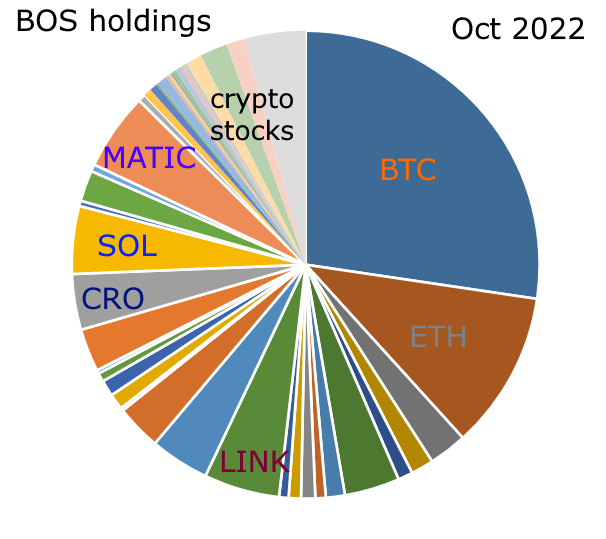
Bitcoin alone or a diversified crypto portfolio?
Bitcoin is the largest and best-known crypto asset, but investing only in Bitcoin means concentrating your crypto exposure in one asset; like only owning stock in one major bank. You’re unlikely to lose everything, but you’re also unlikely to win big on alternative news events and tech breakthroughs. Another approach is to diversify across carefully selected digital assets and related technologies.
Diversification does not magically make crypto safe. Owning 30 bad investments is not necessarily better than owning one good one. The point is to avoid relying unnecessarily on the success of a single asset while understanding what you own and why you own it.
We recommend diversification as a general investment principle, while warning that crypto itself remains highly speculative and volatile.
What about wallets, custody and exchanges?
This is one of the practical differences between crypto and many traditional investments: Someone needs to manage custody, wallets, private keys, exchanges and transaction records.
If you lose control of a private key, the consequences can be far more serious than forgetting your CommBank password.
Crypto can be stolen, losing a private key can mean losing access to the crypto, and many crypto providers may not provide the protections investors expect from conventional financial services.
Some SMSF trustees are comfortable managing all of this themselves. Others want someone else to do it for them. Neither answer is automatically right or wrong. But trustees should understand who controls the assets, how they are stored and what happens if something goes wrong.
Be careful with SMSF crypto promotions
Crypto and superannuation together can attract some colourful characters. ASIC has specifically warned Australians about promotions encouraging people to establish or switch to an SMSF to invest in supposedly high-return crypto portfolios.
Most importantly, the trustee remains responsible for the SMSF’s decisions and legal compliance, even when relying on somebody else’s advice. So take your time.
Understand the investment, the fees, and where the assets are held. Check who you’re dealing with. Treat anyone promising guaranteed crypto returns with the enthusiasm normally reserved for an email from a Nigerian prince.

So, can an SMSF invest in crypto?
Yes, potentially.
The ATO does not prohibit SMSFs from investing in crypto assets. But that is the beginning of the conversation, not the end.
Before investing, you need to make sure that:
- your trust deed permits the investment;
- it fits the fund’s documented investment strategy;
- ownership and custody are clearly established;
- appropriate records are maintained;
- the investment complies with your SMSF rules; and
- the amount invested makes sense within the fund’s overall portfolio.
Most importantly, understand what you’re buying and why you’re buying it. If you’re unsure, talk to your accountant, SMSF specialist, tax adviser or appropriately licensed financial adviser before moving any money.
Prefer not to manage crypto yourself?
Some investors are comfortable researching individual crypto assets, managing wallets and custody, keeping records and monitoring a portfolio themselves. Others would rather have professional management. BostonTrading has been investing in digital assets since 2016. Our approach is based on the same principles we have applied to stock markets and other traditional investments for decades:
Understand what you own. Diversify. Manage risk. Think long-term.
If you’re an Australian wholesale investor considering digital assets, you can learn more about our approach to crypto investing in Australia.
[Explore Crypto Investing in Australia]
Or, if you’d rather speak to a human:
[Talk to a Human at BostonTrading]
Important information
This article provides general information and education only. It does not take into account your objectives, financial situation or needs and should not be relied upon as financial, taxation, legal or superannuation advice. Information concerning SMSF rules in this article has been reviewed for the financial year ended 30 June 2026. Legislation, regulations, taxation rules and regulatory guidance may change after that date. Your circumstances may be different. Before making an investment decision or changing your SMSF’s investment strategy, consider your own circumstances and obtain appropriate professional advice from your accountant, tax specialist, SMSF professional and/or appropriately licensed financial adviser. Cryptocurrencies and digital assets are volatile and high risk. You may lose some or all of the money invested. Past performance is not a reliable indicator of future performance. Always speak to an expert whom you have researched and vetted before taking any action.

