


November wasn’t about price swings. It was about something bigger: the moment traditional finance stopped sitting on the sidelines and started buying in.
Bank of America told its advisors to recommend crypto. Morgan Stanley set crypto investment guidelines. Vanguard opened its platform to 50 million clients. Charles Schwab announced direct trading for 2026, and Grayscale predicted new all-time highs ahead.
If you’ve been waiting for a sign that crypto has gone mainstream, this is it.
Here’s what happened and why it matters.

The Banks Are All Saying the Same Thing
Bank of America made headlines when it told wealth management clients to consider putting 1% to 4% of their portfolios into crypto. Starting January 5, the bank’s 15,000 advisors can recommend four bitcoin ETFs from Bitwise, Fidelity, Grayscale, and BlackRock.
This is a complete shift. Previously, those advisors couldn’t bring up crypto unless a client asked first. Now they can include it in every portfolio conversation.
“For (many) investors, a modest allocation of 1% to 4% in digital assets could be appropriate,” said Chris Hyzy, Bank of America’s chief investment officer.
Morgan Stanley landed in the same place. Their global investment committee told advisors that growth-focused investors can allocate up to 4% to crypto. They’re calling it a “speculative and increasingly popular” asset class, comparable to “digital gold”.
The pattern is clear. BlackRock recommends 1% to 2%. Fidelity suggests 2% to 5%, and up to 7.5% for younger investors. Grayscale’s research points to an optimal crypto allocation of around 5%.
Wall Street has done the math. The answer is: own some crypto.
Vanguard Joins the Party
This was the big one.
For years, Vanguard took a cautious stance on digital assets. Their leadership maintained that crypto didn’t fit their long-term investment philosophy.
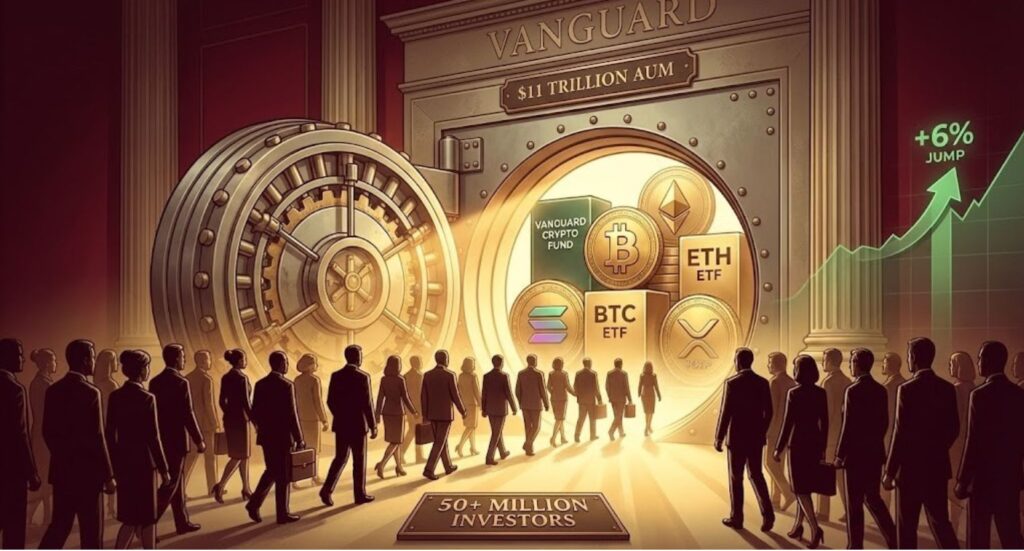
On December 2, Vanguard changed course. The firm now allows clients to buy and sell crypto ETFs on its platform. Bitcoin, Ethereum, Solana, and XRP funds are all available.
This move from Vanguard opens the door to 50 million customers with over $11 trillion in combined assets.
The market responded. Bitcoin jumped about 6% the day trading went live.
What changed? Demand. Crypto ETFs have become one of the fastest-growing segments in fund industry history. BlackRock’s bitcoin fund alone peaked near $100 billion in assets this year. Vanguard finally recognized the opportunity and moved forward.
“Cryptocurrency ETFs and mutual funds have been tested through periods of market volatility, performing as designed while maintaining liquidity,” said Andrew Kadjeski, Vanguard’s head of brokerage and investments.
When one of the world’s largest asset managers opens its doors to crypto, that tells you where the industry is headed.
Charles Schwab Is Next
The momentum keeps building.
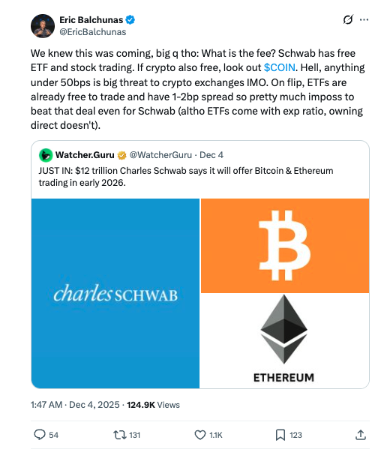
Charles Schwab announced it will offer direct Bitcoin and Ethereum trading in the first half of 2026. CEO Rick Wurster shared the news at the Reuters Next conference in New York.
Schwab manages over $10 trillion in client assets. This isn’t a small player testing the waters. This is one of America’s largest brokerages making a strategic commitment to digital assets.
The rollout will be phased: employees first, then a small group of clients, then broader access. Schwab wants to get it right before scaling up.
Bloomberg analyst Eric Balchunas noted that pricing will be key. Schwab already offers free stock and ETF trading. If they bring competitive pricing to crypto, it could reshape the entire market.
Grayscale Sees New Highs Ahead
Here’s the forward-looking view.
Grayscale Research published a report predicting that Bitcoin will reach new all-time highs in 2026. Their analysts pushed back against the idea that crypto follows a predictable four-year cycle of boom and bust.
“Although the outlook is uncertain, we believe the four-year cycle thesis will prove to be incorrect, and that bitcoin’s price will potentially make new highs next year,” the Grayscale team wrote.
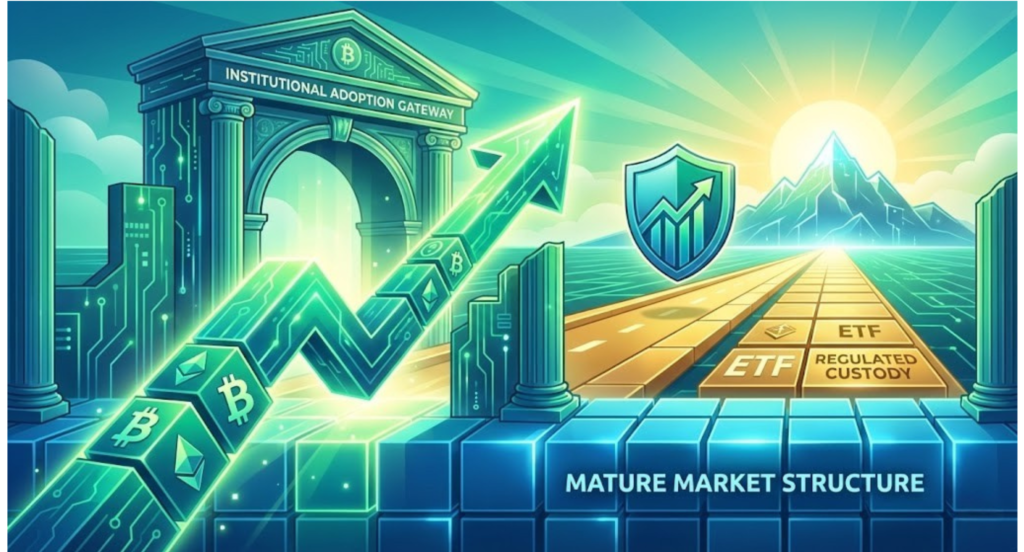
Their reasoning: today’s market structure looks different from previous cycles. Institutional money is flowing through ETFs and corporate treasuries rather than retail speculation on exchanges. That creates a more stable foundation.
BitMine CEO Tom Lee echoed the optimism, telling CNBC he expects bitcoin to set a fresh all-time high by January.
What November Actually Taught Us
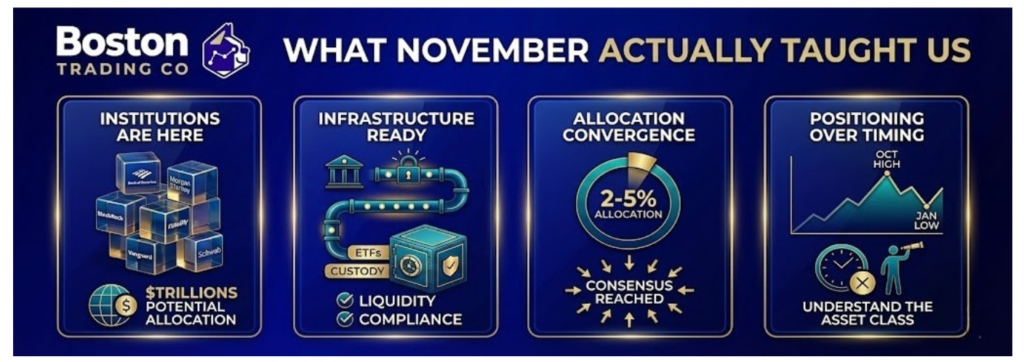
Now we know we have been proven correct. The institutions are moving to join us in Cryptopia. Bank of America, Morgan Stanley, BlackRock, Fidelity, Vanguard, and Schwab are all telling clients to own crypto. That’s trillions of dollars in potential allocation.
Second, the infrastructure is ready. These banks aren’t recommending that people buy Bitcoin on unregulated platforms. They’re pointing to ETFs with proper custody, liquidity, and compliance. The plumbing works.
Third, allocation guidance is converging. Whether it’s 2%, 4%, or 5%, the major players agree: a small percentage of your portfolio should be allocated in digital assets. That consensus didn’t exist two years ago.
Fourth, timing matters less than positioning. Yes, prices pulled back from October highs, but we’re still well up from January. The banks aren’t buying because prices dipped. They’re buying because they finally understand the asset class.
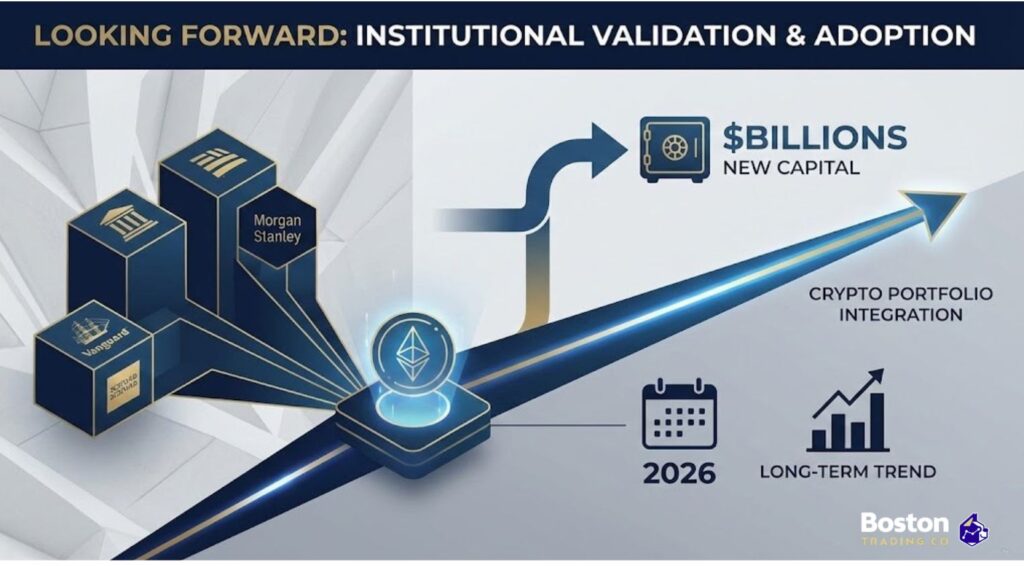
Looking Forward
We jumped into crypto ten years ago. Now, Bank of America, Morgan Stanley, Vanguard, and Schwab are working hard to catch up.
That’s validation. When the most established institutions in finance start recommending what you’ve been doing for a decade, you know you were early to something real.
The year 2026 looks promising. The regulatory environment has cleared up. The products exist. The distribution channels are open. Grayscale sees new highs on the horizon, and billions of dollars in new capital now have permission to flow into digital assets.
Markets move up and down. That’s the nature of any asset class. However, the long-term trend is unmistakable: crypto is becoming a standard part of portfolio construction.
At BostonTrading, we’ve always believed that quality assets with strong fundamentals win over time. November proved that the rest of finance is starting to agree.
Buckle up. The next chapter is just beginning.
Fund Updates
POLLY AI
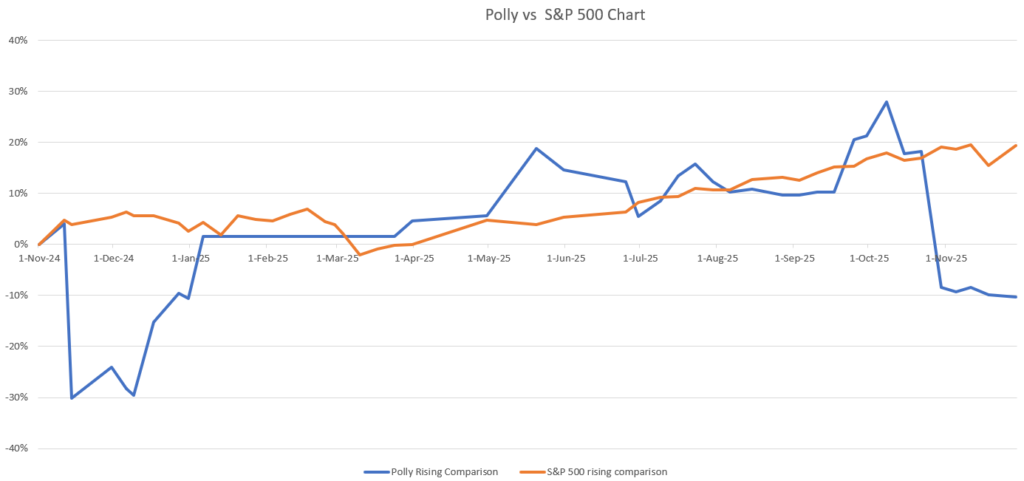
Our little AI-powered girl has had a bumpy ride this year. After climbing to around +27% in October, the market correction hit her hard. She’s working her way back, and we expect her to regain ground as conditions stabilize. Although it is our lower-risk alternative, POLLY AI still carries some market risk, and investors should be prepared to hold for 3-5 years to achieve optimal results.
POLLY AI Nov 30: price was USD 107.10
BOSTONCOIN
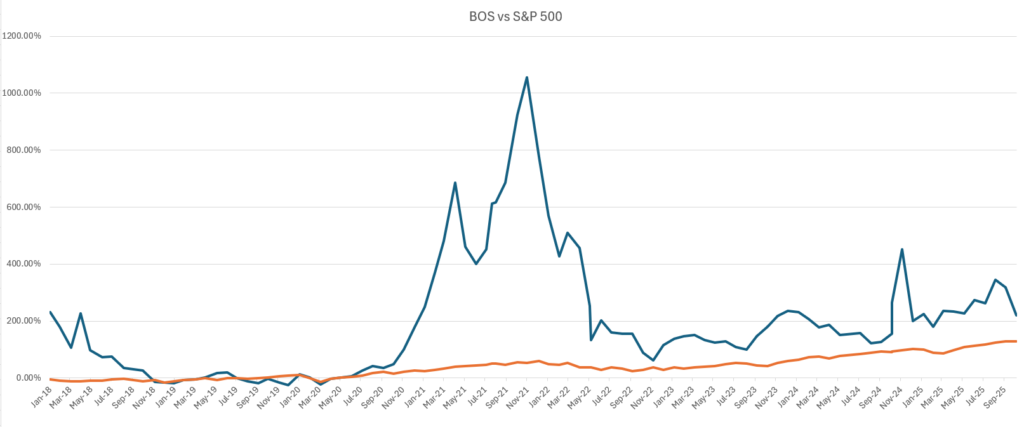
Our flagship Bostoncoin fund has been making all the right moves over the last few years, through up-and-down markets, thanks to its diversification. Yes, there have been some drops, but over time, the ride has been heading up. We present the long-term chart for full transparency (2022 was the year of FTX, Celsius, and Terra Luna), but the years since have been much more favorable. BOS investors should hang in there for 5-7 years and aim for longer-term growth.
BOSTONCOIN Nov 30: price was USD 63.36, still well ahead of the S&P 500 over the fund’s lifetime.
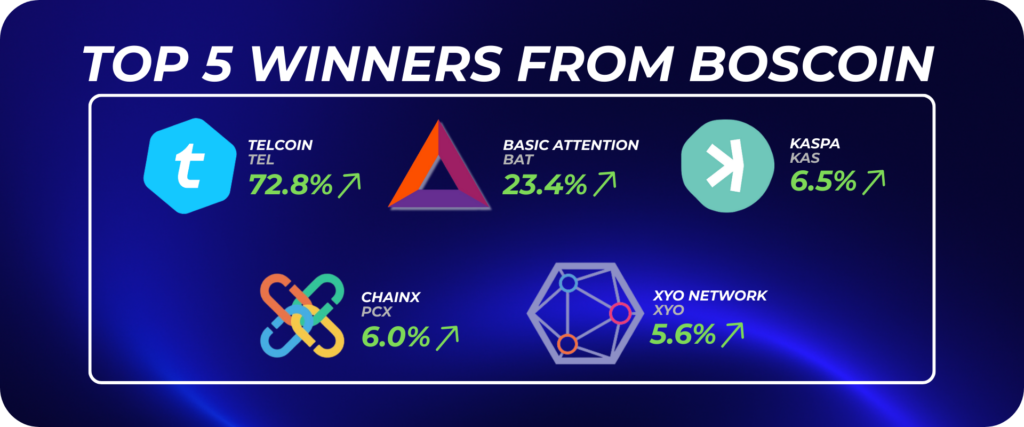
Top 5 Winners from BOSCOIN (Last 30-Day Performance)
Here is a summary of the top-performing coins based on the percentage change over the last 30 days shown in the data.
DARTcoin
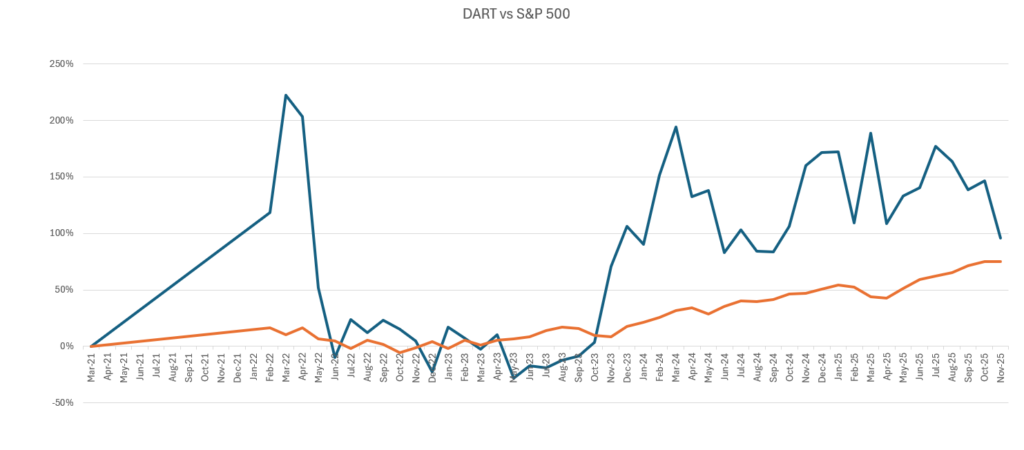
Our boisterous young man with the higher-risk angle has been making some wild jumps up and down, but thankfully, mostly up. As we drift slowly into altcoin season, there may be some more swings ahead, which is why we suggest DART with a 7-10 year timeframe. The long-term trend remains firmly above the S&P 500.
DARTcoin Nov 30: price was USD 129.04, still significantly outperforming the benchmark.
RAFAH
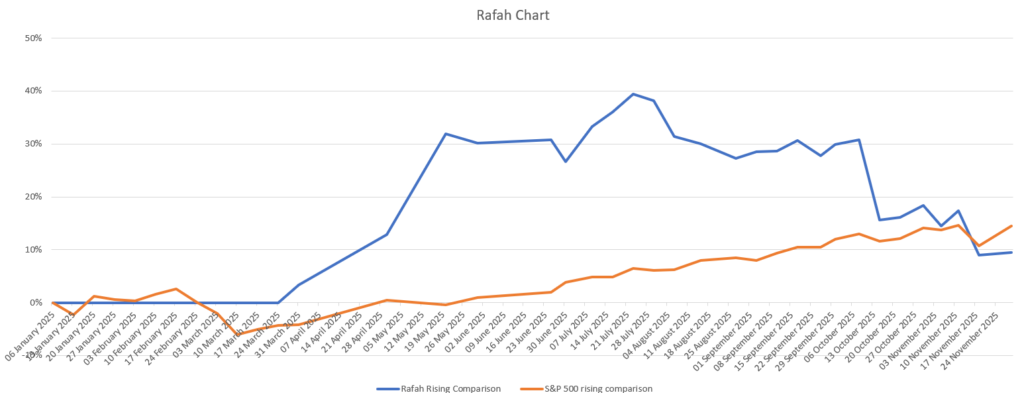
Our Rafah Halal crypto fund continues to track near the S&P 500 stock market benchmark, despite recent dips. It goes to show that ethical funds can hold their own, even when they avoid leverage, memes, and gambling. The fund remains in positive territory for the year.
RAFAH Nov 30: price was USD 97.20
OYSHER
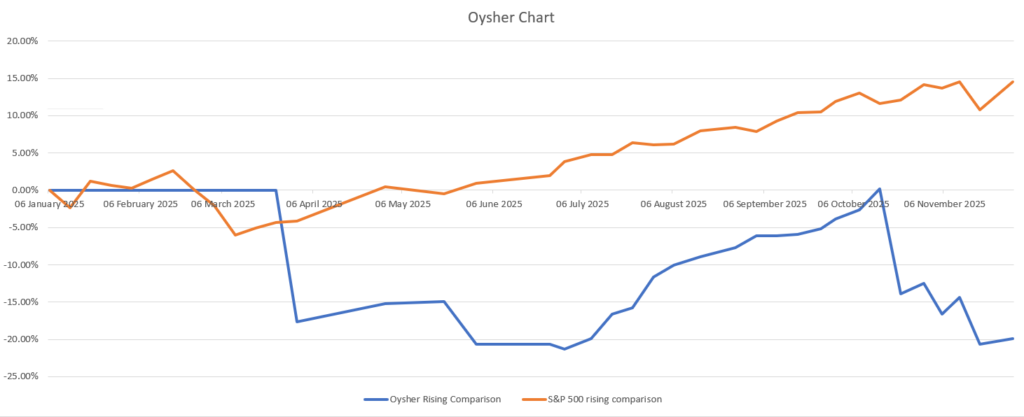
Our Oysher Kosher crypto fund has had a challenging twelve months. Due to its Halachic ethical mandate, we cannot significantly alter its strategies. It is certainly one to watch and not abandon as markets will eventually move away from the fear, uncertainty, and doubt that has crept in during the current situations in the Middle East and the USA. Better times ahead!
OYSHER Nov 30: price was USD 97.13
ASHIRVAD
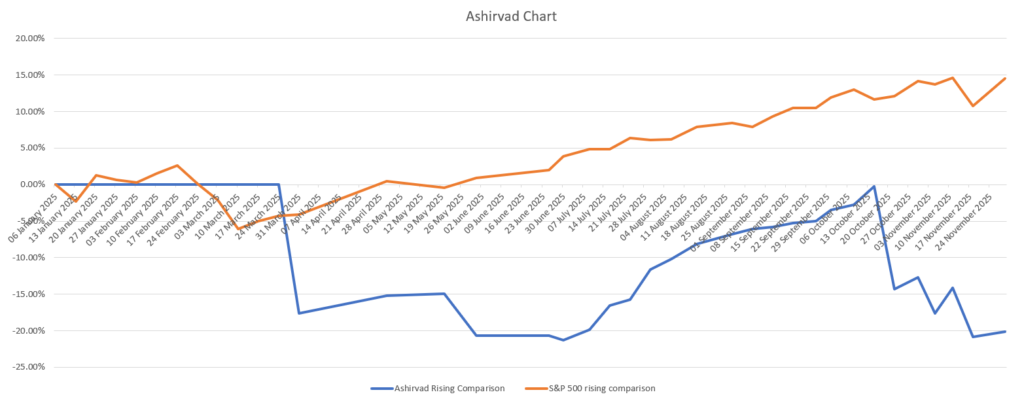
Our Ashirvad Sanatana Dharma fund has also had a challenging year. Again, there is little room to shift strategies due to its ethical mandate. There are times when the economy is uncertain, and that’s often when people spend more money on vices such as gambling, alcohol, and tobacco. During recovery periods, investors are more likely to steer towards sustainable futures, emerging technologies, and safe energy sources. We continue to buy good-quality items while they are affordable and hold on for better days.
ASHIRVAD Nov 30: price was USD 96.90
Enjoying the crypto market update?
If this update helped you stay informed, here’s how you can support us:
- Leave us a review – & we will donate to your chosen charity.
- Forward this email to a friend and help others stay informed.
- Post about the little blue dog on X (Twitter), LinkedIn, or Facebook using #BostonCoin
Ready to explore the Boston fund?
Book a Discovery Call here
Until next time
JB

