



The second half of February felt like watching someone try to climb a greased wall. Bitcoin made a run at $70,000 around February 25, got close enough to touch it, and slid right back to about $65,700 by month’s end. Prices, though, are only part of the story. While Bitcoin went sideways, America’s top banking regulator published a 376-page rulebook for stablecoins, a crypto lender lost $75 million and its CEO walked out, big money kept buying through ETFs, and U.S. and Israeli forces struck Iran on the last day of the month.
The Price Picture
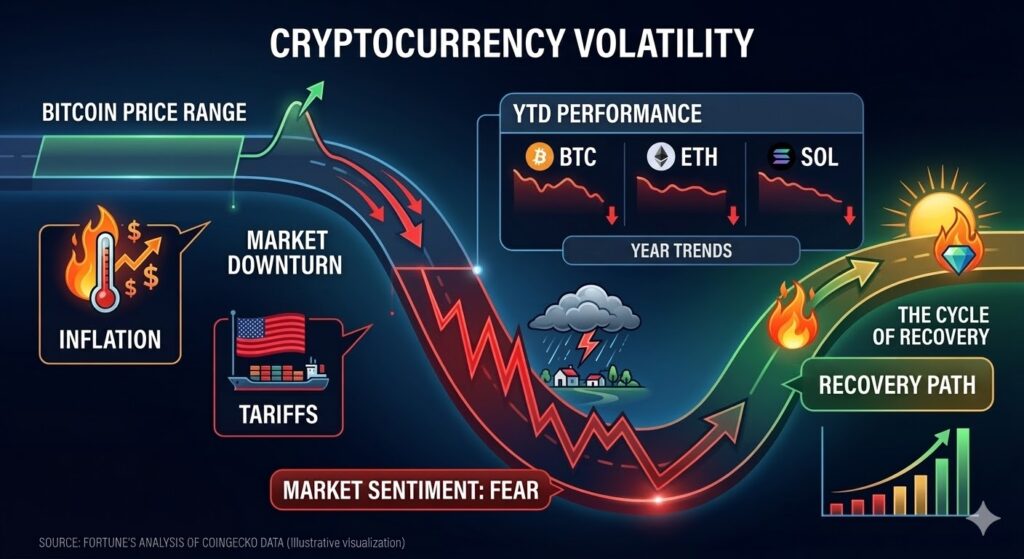
Bitcoin bounced between $65,000 and $70,000 for two straight weeks. A brief push toward $70,000 on February 25 lasted about 48 hours before hotter-than-expected inflation data killed the mood, and Trump raising retaliatory tariffs against U.S. trading partners to 15% made things worse.
By February 28, we were back near $65,700, with Ethereum hovering around $2,000 and Solana dipping below $90. According to Fortune’s analysis of CoinGecko data, these are the worst year-to-date starts on record for both Bitcoin and Ethereum.
That sounds scary, but this market has been here before, and the biggest recoveries have always started from this kind of fear.
Uncle Sam Writes the Stablecoin Rulebook

On February 25, the Office of the Comptroller of the Currency published a massive proposed rule for how stablecoins should work under American law. Stablecoins are digital coins pegged to the U.S. dollar, worth over $200 billion combined, and they are quickly becoming a backbone for cross-border payments.
The new rules cover who can issue stablecoins, what reserves they need (real dollars and Treasuries, 100% backed), and how they get audited. Banks are nervous because companies like Paxos and Circle now let regular tech companies launch their own branded digital dollars, which could pull deposits away from traditional lenders. The banks want to block stablecoin issuers from paying any rewards to users, while the crypto industry is fighting to keep that option open, with final rules due by July. The bigger picture here is that the U.S. government is not trying to kill stablecoins; it is bringing them inside the tent.
When the Tide Goes Out: BlockFills
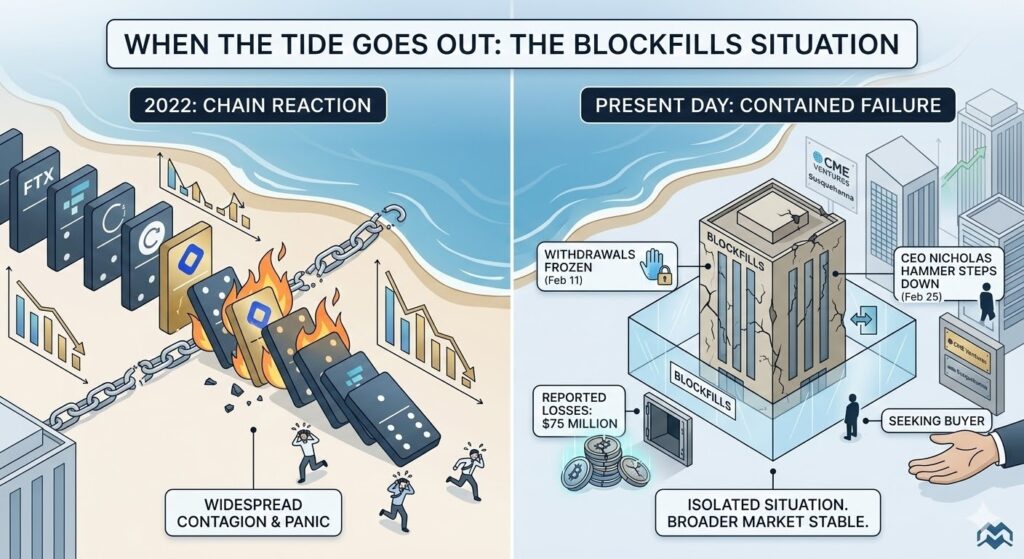
BlockFills, a Chicago-based crypto lending firm backed by CME Ventures and Susquehanna, froze client withdrawals on February 11, and by February 25, co-founder and CEO Nicholas Hammer had stepped down after losses reportedly hit $75 million, and the firm is now looking for a buyer.
Unlike 2022, when FTX, Celsius, and BlockFi collapsed in a chain reaction, this situation has stayed contained. No other major firms reported similar problems, and the broader market barely flinched.
Big Money Keeps Buying
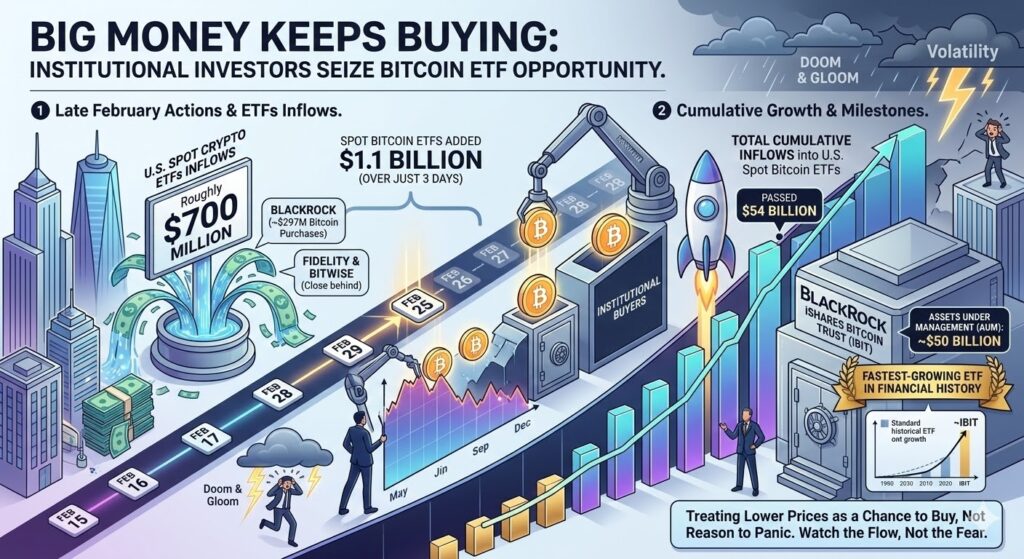
Despite all the doom and gloom, institutional investors kept buying throughout the second half of February.
On February 25 alone, U.S. spot crypto ETFs pulled in roughly $700 million, with BlackRock leading at about $297 million in Bitcoin purchases and Fidelity and Bitwise close behind. Over just three days, spot Bitcoin ETFs added $1.1 billion in total.
Total cumulative inflows into U.S. spot Bitcoin ETFs have now passed $54 billion, and BlackRock’s iShares Bitcoin Trust holds about $50 billion in assets, making it the fastest-growing ETF in financial history.
When the people running the biggest pools of money on the planet are treating lower prices as a chance to buy rather than a reason to panic, it is worth paying attention.
Bombs, Bitcoin, and Always-On Markets
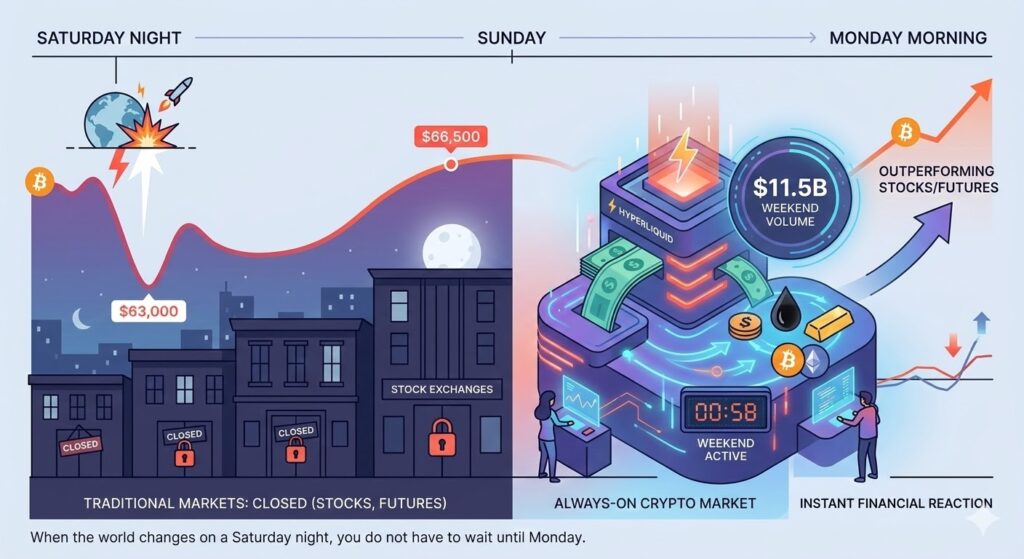
On Saturday, February 28, U.S. and Israeli forces struck Iran, killing Supreme Leader Ayatollah Ali Khamenei. Iran retaliated with missiles targeting Israel and U.S. bases across the Gulf. Stock markets were closed for the weekend, futures markets were dark, and the only financial markets still open were crypto.
Hyperliquid, a decentralized exchange, saw its trading volume top $11.5 billion over the weekend as traders used the platform for synthetic futures on oil, gold, and crypto while the rest of the financial world slept. Bitcoin dipped to $63,000 on the initial news, recovered to about $66,500 by Sunday, and was outperforming stock futures by Monday morning. When the world changes on a Saturday night, you do not have to wait until Monday to find out what it means for your money.
Our Fund Performance
The market is down right now, and prices across all our funds reflect the broader crypto selloff. Bitcoin has dropped roughly 50% from its recent high, and many altcoins have fallen 80-90% from their peaks. That is uncomfortable to see, but every major crypto downturn in history has been followed by a recovery, and those recoveries have consistently been larger than the drops that came before them.
To keep things in perspective: major institutions are still buying crypto at these lower prices, as you can read in the market update above.
For those with spare funds available, lower prices mean your money buys more coin today than it would have six months ago. That said, waiting on the sidelines is a completely valid strategy too. Our funds stay diversified across multiple coins and projects, not just one. The long-term case for crypto has not changed, and patient investors have been rewarded in every previous cycle.
Bostoncoin (BOS)
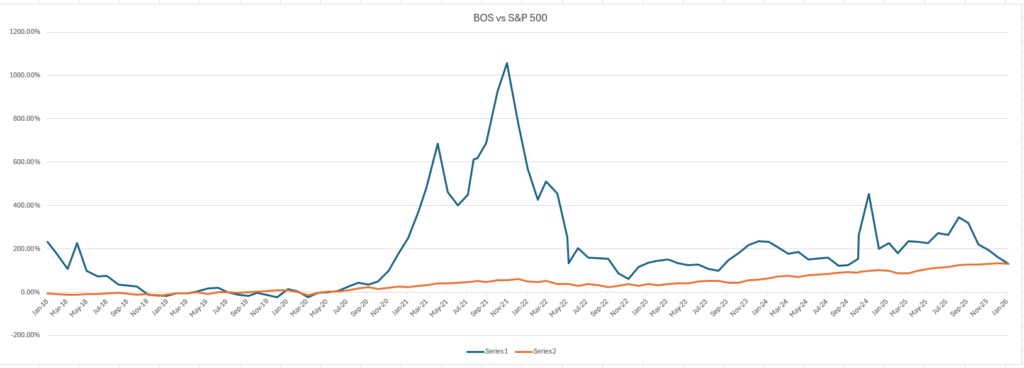
BOS is sitting at around 150% gains from where it started, roughly in line with the S&P 500 right now. That gap will look very different once crypto recovers, as it has done after every previous downturn.
Bostoncoin price as at February 28, 2026: USD 49.64
DART
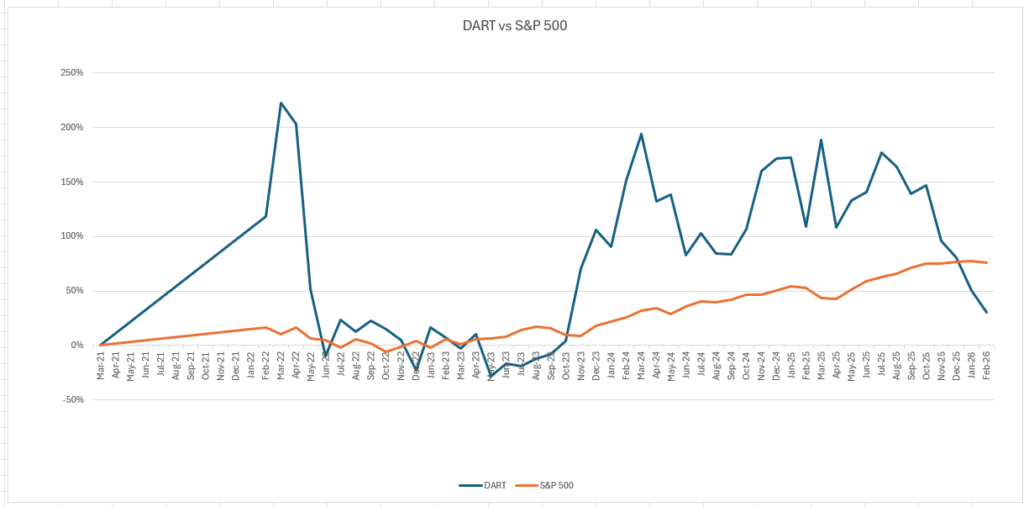
DART is up around 30% from its launch date, holding positive despite the market conditions. The S&P 500 has pulled ahead over the same period, but crypto is trading at a significant discount right now, and patient holders have seen these gaps close fast before.
DARTcoin price as at February 28, 2026: USD 93.02
Polly
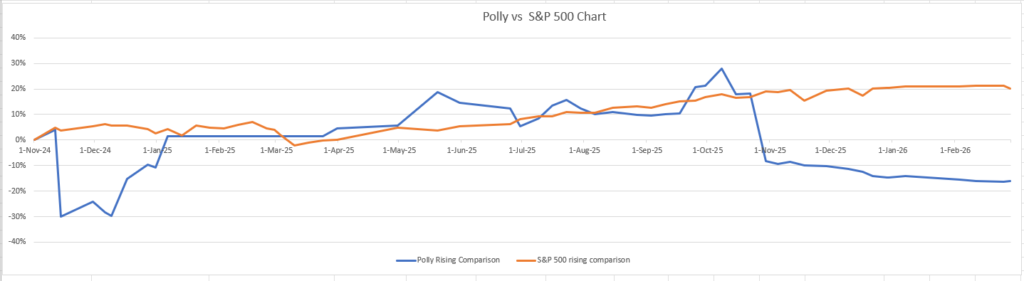
Polly is currently down around 18% from its start date in November 2024. The broader crypto market has had a tough run since late 2025, and Polly reflects that.
POLLYcoin price as at February 28, 2026: USD 100.16
Rafah
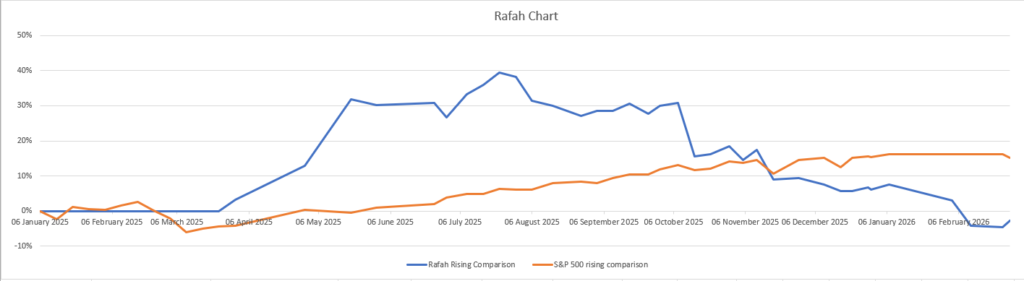
Rafah is sitting close to flat from its January 2025 start, which is a solid result compared to most crypto assets over that period. It held up better than many coins through the recent selloff.
RAFAH price as at February 28, 2026: USD 86.40
Ashirvad
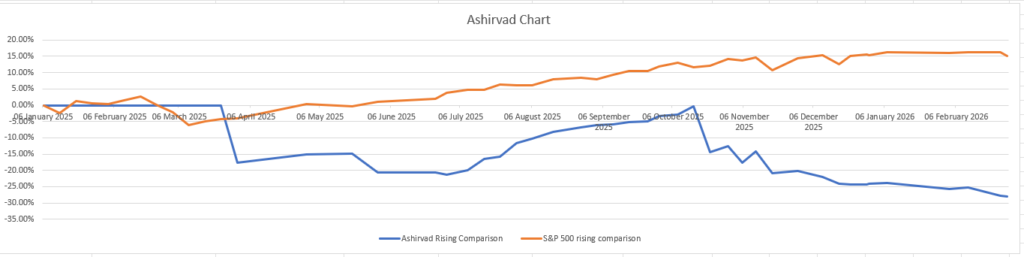
Ashirvad is currently down around 32% from its January 2025 start. The S&P 500 is up around 16% over the same window, so the gap is real and we are not going to dress it up. Crypto is down hard across the board right now, and these numbers reflect that.
Ashirvad price as at February 28, 2026: USD 87.16
Oysher
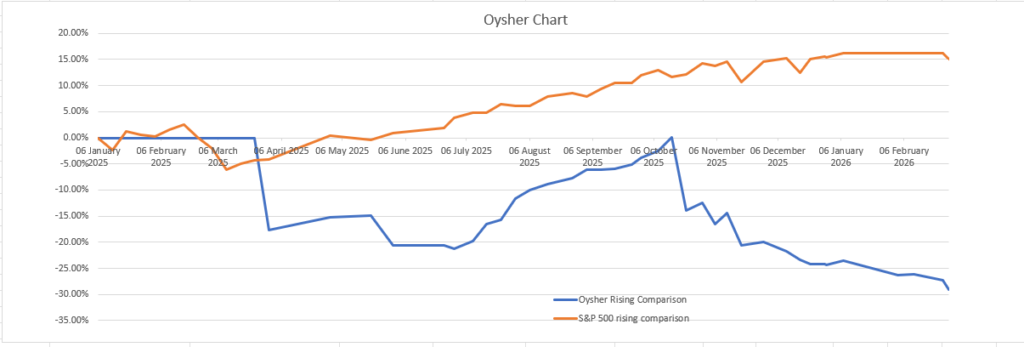
Oysher is down around 29% from its January 2025 start, again reflecting where the broader crypto market sits today. The S&P 500 is up around 16% over that same period. When crypto turns, these funds are positioned to move quickly.
Oysher price as at February 28, 2026: USD 86.12
What We Are Watching
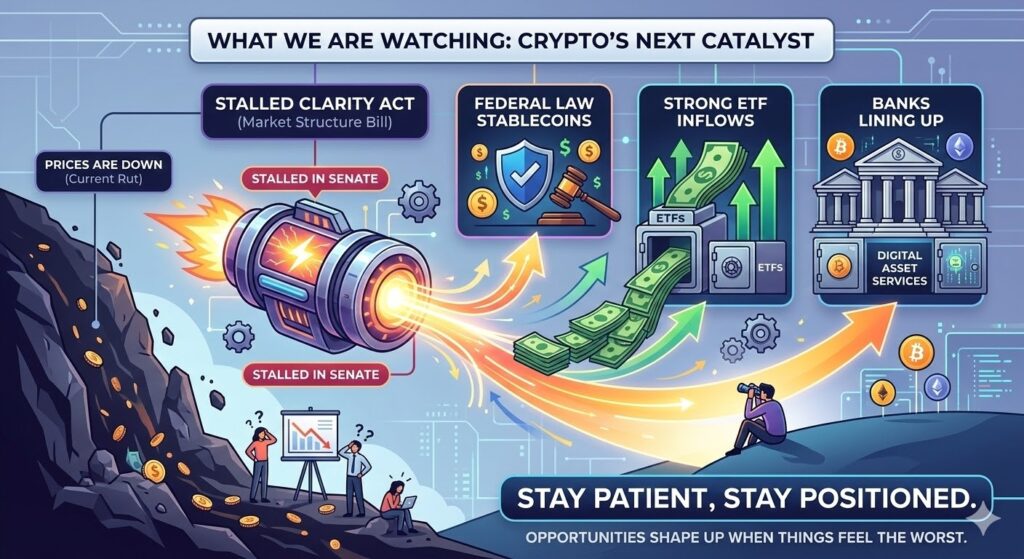
JPMorgan said that the stalled Clarity Act, a market structure bill sitting in the Senate, could be the spark that pulls crypto out of its current rut. The bill would split oversight between the SEC and CFTC and let new projects raise up to $75 million a year without full registration. Prices are down, yes, but stablecoins are being written into federal law, ETF inflows remain strong, and traditional banks are lining up to offer digital asset services. Sometimes the most important changes happen while the market is busy looking the other way.
Stay patient, stay positioned, and remember that the best opportunities tend to show up when things feel the worst.
– JB
We Would Love Your Feedback
If this update helped you stay informed:
✓ Leave us a review, and we will donate to your chosen charity
✓ Please forward this to a friend who needs clarity
✓ Share on X, LinkedIn, or Facebook with #BostonCoin
Ready to explore the Boston fund? Book a Discovery Call
Send a screenshot of your TrustPilot review to support@bostontrading.co with your address, and we will send you a sweet gift from the team.

