



January 2026: world leaders, financiers, politicians, journalists, bankers, and other boffins gathered in a small town in Switzerland for the World Economic Forum (WEF).
Jennifer and Jeremy walked into a room in Davos where the name tags read like a list of the world’s most powerful business leaders. The session was about digital assets, and five years ago, that topic would have been a side conversation in a hotel lobby.
This year, crypto was on the main stage, with central bankers, money managers, and government officials sitting in the front rows taking notes.
The World Economic Forum is never early to anything, and when crypto shows up at Davos, it means the debate is over. The real conversations happened in the hallways between sessions, where Jennifer and I spent several days talking with people who manage money for governments, wealthy families, and big institutions.
Their questions were no longer “Should we buy crypto?” but rather “How fast can we move?” and “Who can help us do this the right way?”
The building phase is complete. Bitcoin ETFs exist, safe storage solutions meet professional standards, and rules are taking shape. The excuses that kept trillions of dollars on the sidelines for a decade have disappeared. Here is what else happened in January.
Bitcoin Takes Center Stage at Davos
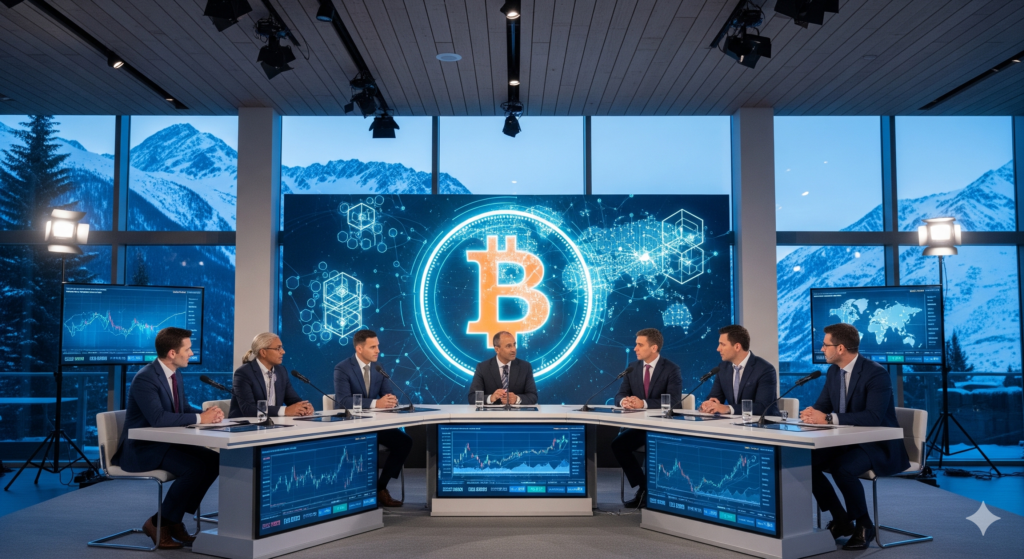
Coinbase CEO Brian Armstrong made headlines when he got into an argument with the head of France’s central bank on a panel about turning real-world assets into digital tokens. When the French banker said he trusts “central banks with democratic mandates more than private issuers of Bitcoin,” Armstrong corrected him on the spot.
“Bitcoin is a decentralized protocol,” Armstrong responded. “There is no issuer at all. Bitcoin is even more independent than central banks because no country, company, or individual controls it anywhere in the world.” Armstrong went further, suggesting that Bitcoin could serve as a backup to paper money that loses value over time. Five years ago, that kind of talk would have seen you laughed out of the room, yet this year it was part of the official program.
President Trump also showed up at Davos and said he was hopeful about crypto laws. “Congress is working very hard on crypto legislation, which I hope to sign very soon,” he said. We are also hoping that the USA does something to make crypto great again.
(No: Jennifer and Jeremy did *not* see Trump or hear his speech where he confused Greenland with Iceland four times. At the same time as POTUS’ speech, Jennifer was speaking at another forum on women’s mental health, and Jeremy was speaking on crypto in a different hotel. I am sure that if circumstances were different, ‘the Don” would have loved to come and see our talks.)
Ripple (XRP) CEO Brad Garlinghouse predicted Bitcoin would hit a new record high in 2026, while UBS CEO Sergio Ermotti said that “blockchain is the future for traditional banking.” It’s great when Wall Street bankers agree with the crypto bros.
The Regulators Spoke
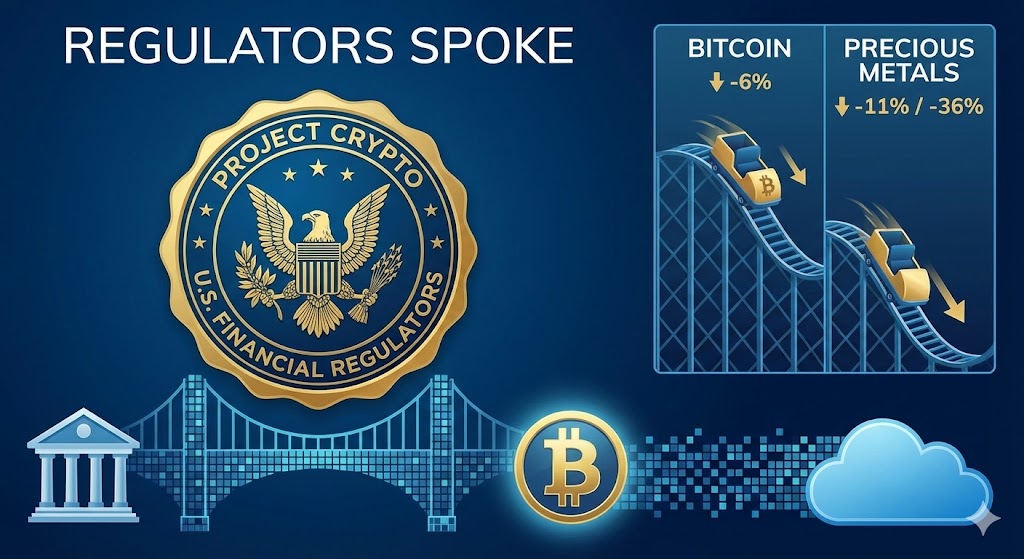
On January 29, U.S. financial regulators launched “Project Crypto,” marking rare cooperation between the agencies that oversee markets. Officials said retirement plans could include crypto with strong safeguards and argued that clear rules would unlock new digital asset products. A Senate committee also advanced a crypto bill quickly, showing a major shift as regulators now focus on how fast they can bring crypto into mainstream finance.
The Price Roller Coaster
Gold dropped 11%, and silver plunged 36% during the selloff, but Bitcoin fell just 6%. While forced to sell crushed precious metals, Bitcoin stayed comparatively stable. The gap underscored Bitcoin’s resilience as traditional safe havens broke down.
Fund Updates
BOS vs S&P 500
BOS USD 54.86 as of Jan 30 2026
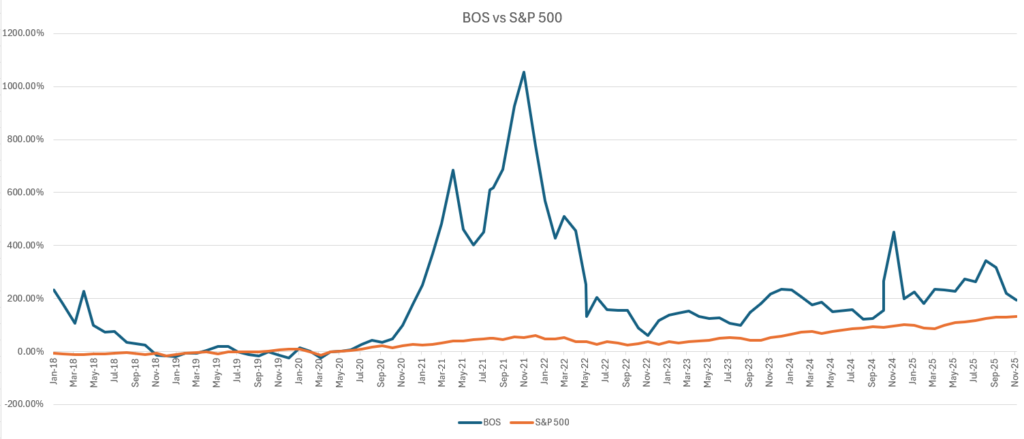
Bostoncoin pulled back from its September highs and sits at around 200% growth since we started in 2018. The S&P 500 over the same time? About 130%. So even after a rough few months, BOS has still done better than the stock market over nearly eight years. Prices go up, and they come down. That is how markets work. The important thing is where you end up over the long run, and BOS investors are still well ahead. We built this fund for people who can sit tight for 5 to 7 years.
DART vs S&P 500
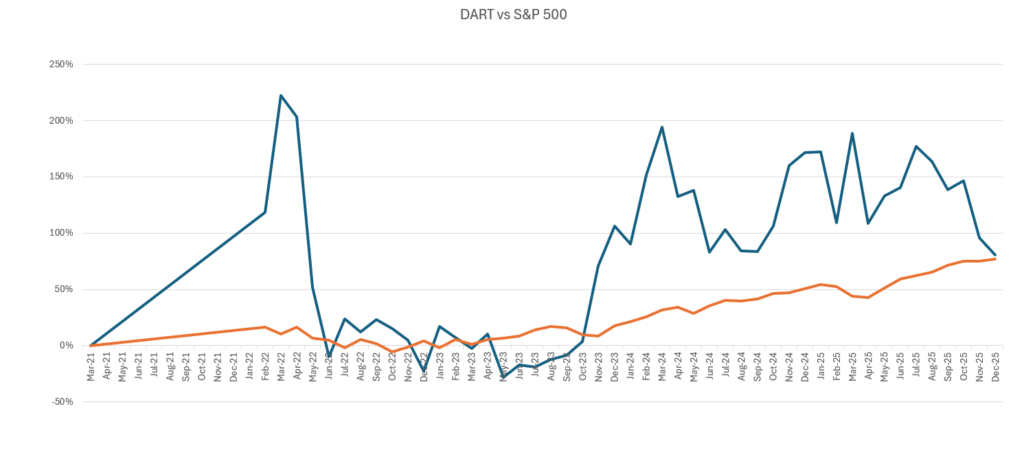
DART had a bumpy January and gave back some gains, finishing around 75% growth since launch. That puts it close to the S&P 500 right now. If you have been with us for a while, you have seen DART do this before. It shot up to 220% in 2022, fell back to almost nothing in 2023, then climbed above 190% again by early 2025. The big ups and downs are part of how this fund works. Every time DART has dropped like this, it has come back. We built DART for people who want bigger growth and can hold on for 7 to 10 years while it does its thing.
What This Means
January gave us the full crypto experience: Davos acceptance, progress on rules, wild price swings, and big companies buying. All in one month.
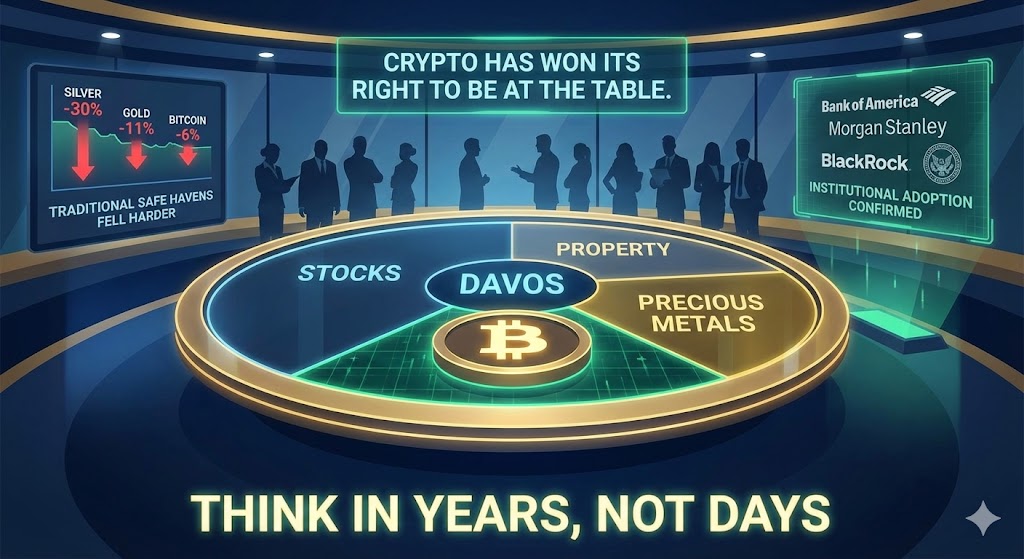
The conversations Jennifer and Jeremy had at Davos confirmed what we have been saying for years. The big money managers are already here. Bank of America, Morgan Stanley, Vanguard, BlackRock, the SEC, the CFTC, and pension fund managers are asking where to start. The debate about whether crypto belongs in serious portfolios is over. Crypto has won its right to be at the table with stocks, property, and precious metals.
The price drop at month-end may have startled a lot of people, and it should have scared those who borrowed too much money to make risky bets. It should not have concerned anyone thinking in years rather than days.
We got in when crypto was still considered weird, back in 2016, when most people did not know what Bitcoin was. The pattern has always been the same: the best opportunities come when things feel uncertain, not when everyone is celebrating new highs.
Silver crashed 30% in one day. Gold dropped 11%. Bitcoin fell 6%. Traditional “safe” investments fell hard and fast while digital assets held up better. That tells you something about what kind of asset crypto is becoming.
Altcoins: Any Green Candles in January?
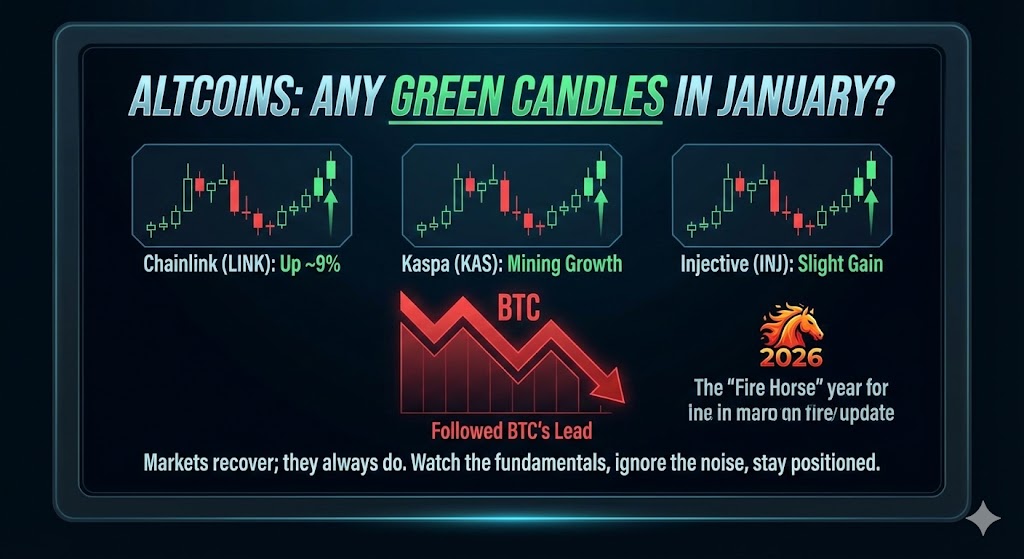
January was rough across the board, but some altcoins held up or even grew:
- Chainlink (LINK): Up ~9% in early January after integrations with traditional finance APIs.
- Kaspa (KAS): One of the few small-cap alts to show strength, driven by mining community growth.
- Injective (INJ): Maintained strength from the December rally: slight gain into mid-January before broader market pullback.
Most altcoins followed BTC’s lead, and when BTC fell in late January, they fell harder. No major “alt season” signs as yet, but we trust that 2026, the year of the Fire Horse, will be better than 2025’s snake year.
Markets recover; they always do. The question is whether you will still be in the game when it happens.
We will be back next month with the February update. Until then, watch the fundamentals, ignore the noise, buy at a discount if you can, and stay positioned.
– JB
We Would Love Your Feedback
If this update helped you stay informed:
Leave us a review at TrustPilot, and we will donate to your chosen charity
Please forward this to a friend who needs clarity
You can share parts of our updates or the whole link, on Twitter, LinkedIn, or Facebook with #BostonCoin
Ready to explore the Boston fund? Book a Discovery Call
Send a screenshot of your TrustPilot review to support@bostontrading.co with your address, and we will send you a sweet new gift from the team.

